




What Fly Do I Use?
Do not begin by asking which named fly is “best”. First ask where the fish are feeding, what they are feeding on, and how your fly needs to behave.
A simple rule: fish on the surface with a dry fly, just below it with a wet fly, deeper natural food with nymphs or buzzers, and use lures or streamers when fish are chasing fry or responding to movement.
One of the most confusing moments for a new fly fisher is opening a fly box and seeing dozens of patterns, colours and sizes. The good news is that you do not need to identify every fly by name before you can make a sensible choice. The first decision is much simpler: where in the water are the fish feeding?
| What you see | Good starting choice | How to think about it |
|---|---|---|
| Fish rising or taking from the surface | Dry fly | Try to imitate the insects on the surface and, when possible, match their size and stage of development. |
| Fish feeding just under the surface | Wet fly | Wet flies work below the surface and can imitate emerging insects, diving flies or small fry. |
| Fish feeding deeper or near the bottom | Nymph or buzzer | Aquatic larvae and pupae are a major natural food source. Depth and retrieve speed matter as much as the exact pattern. |
| Fish chasing fry or feeding aggressively | Lure or streamer | These are designed mainly to suggest baitfish or to attract attention through colour, flash and movement. |
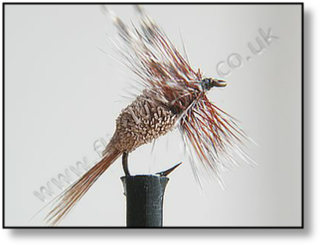
Dry flies — when the fish are looking up
Dry flies are designed to float on the surface. When trout are rising, watch the water and the insects around you. Many dry-fly patterns imitate a particular stage in an insect's life, so “matching the hatch” can mean matching not only the species but also whether the natural fly is emerging, fully developed, laying eggs or spent.
Presentation is important. A convincing dry fly can attract a fish while sitting almost still, because the trout sees its silhouette from below. On moving water, the aim is normally to let it travel naturally with the current rather than dragging it unnaturally across the surface.
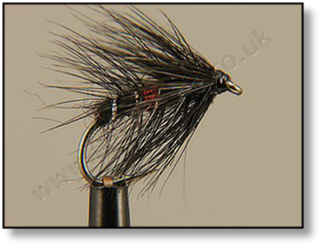
Wet flies — useful just below the surface
Wet flies are intended to sink. They can imitate insects moving through the water, flies returning below the surface to lay eggs, or even small fry. They are usually slimmer than dry flies because they do not need buoyant materials to keep them afloat.
They can be particularly useful when fish are feeding near the top without actually rising. They can also work when trout are attacking pin fry; a light or silvery wet fly moving through the shoal can suggest an escaping small fish.
Nymphs and buzzers — follow the food down
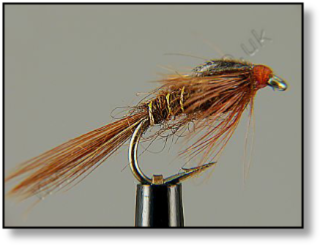
Nymphs imitate the underwater stages of creatures such as mayflies, dragonflies, stoneflies, damselflies and caddis. Buzzers imitate the larval or pupal stages of smaller flies such as midges and chironomids. These forms of natural food can be present for long periods, which is why nymphs and buzzers are such important flies.
If the fish are feeding deeper, think about depth first. A fly that is in the wrong part of the water may be ignored however realistic it looks. Nymphs and buzzers may be fished slowly, sometimes extremely slowly, and some patterns are weighted to reach the fish more quickly.
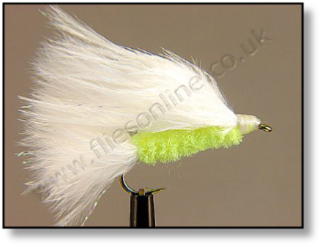
Lures and streamers — when movement matters
Lures and streamers are designed mainly to imitate baitfish or act as attractors. They are especially useful when trout are chasing fry, often later in the season, or when a bright, mobile fly can provoke a response.
Here the retrieve becomes part of the imitation. A lure may be pulled quickly to suggest a fleeing fish, retrieved with short sharp movements to suggest an injured one, or fished at different depths according to where the trout are holding.
Colour, size and pattern come next
Once you have chosen the right type of fly, refine the choice. Look at the natural food, the size of the insects or fry, the depth, light and water conditions, and how the fish are behaving. Sometimes a close imitation is required; at other times a general pattern or an attractor will work perfectly well.
Do not be afraid to change flies. If you are confident fish are present but nothing is happening, alter one thing at a time: the depth, the retrieve, the size or the pattern. That makes it much easier to discover what the fish want than repeatedly changing everything at once.
Want to go deeper? The Fly Fishing Encyclopedia app contains full sections on dry flies, wet flies, nymphs and buzzers, lures and streamers, together with fly-tying material and much more detail on how each type is fished.
GET THE APP HERE